
Tsugaru-han Neputa Village
 Tomas Kauer - News Writer and Moderator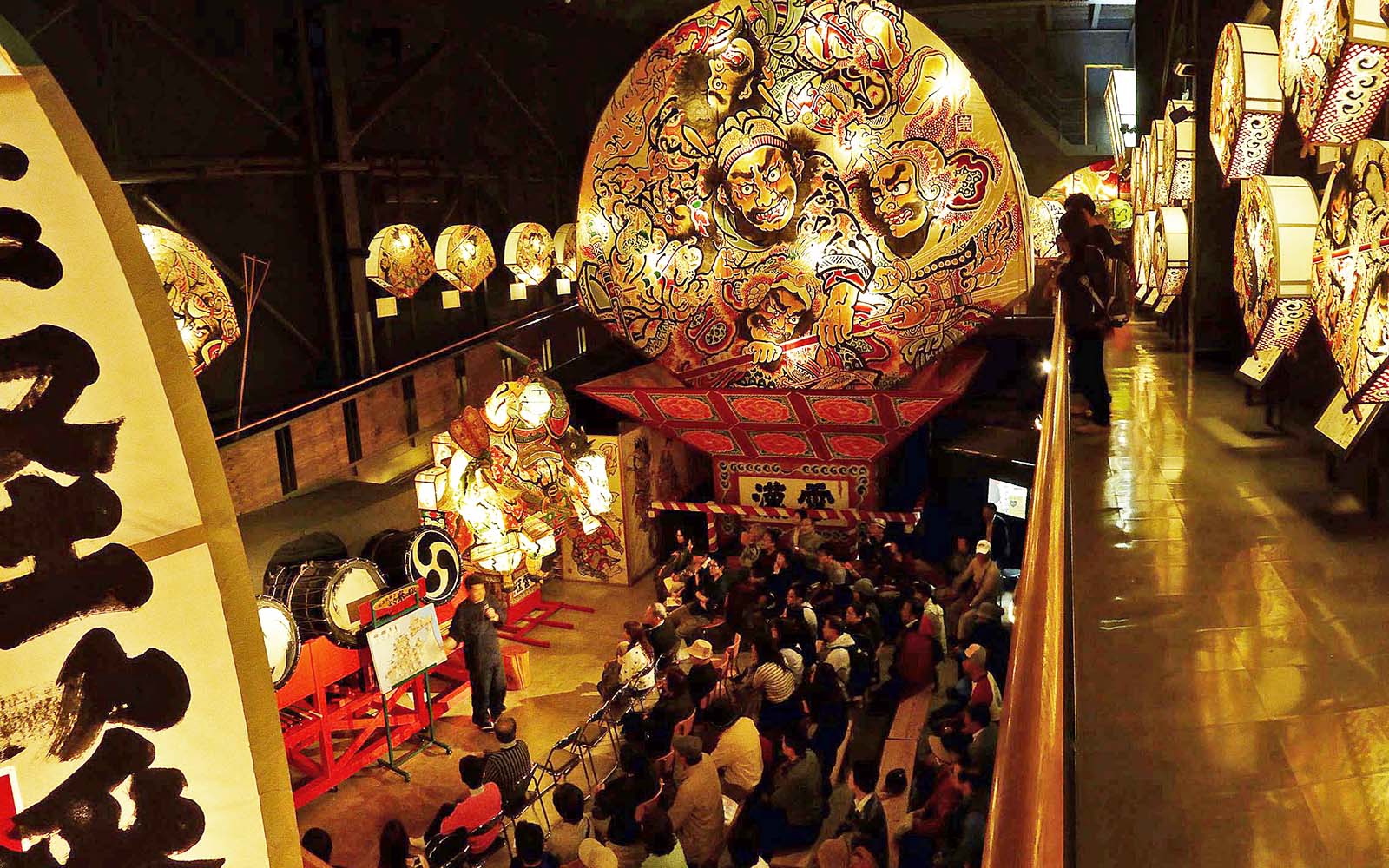

Aomori City is most famous for the grand Nebuta Festival, which takes place every summer. The Tsugaru region also takes pride in its own Neputa Festival, the second-largest festivity of its kind in Aomori Prefecture. The Tsugaru-han Neputa Village in Hirosaki City introduces the history of the Neputa Festival and the region’s diverse crafts.
Neputa Hall
 Photo by: Alma Reyes
The main highlight is Neputa Hall, where visitors learn the background and key features of the Neputa Festival. In contrast to the Nebuta Festival in Aomori City, which features three-dimensional “ningyo-nebuta” (human or doll floats), Hirosaki City’s Neputa Festival uses two-dimensional “ogi-neputa” (fan floats) decorated with paintings of warriors. At the center of the hall stands a ten-meter-high Neputa float adorned with a beautiful woman on one side and a warrior on the other. While visitors marvel at elaborate “Kagami-e” (mirror pictures) of characters from Japanese and Chinese folktales, they can watch a live bamboo flute and taiko drum performance and may also try their hand at the instruments, keeping the beat to the festival music.
Hirosaki Neputa-no Yakata Museum (Neputa Gallery)
 Photo by: Alma Reyes
The gallery displays more Neputa floats that actually parade during the festival. Here, visitors see the evolution of the varied designs, festival gear, paintings and memorabilia from the early Edo era. The corridors glitter with ornate floor lanterns and charming balloon-shaped goldfish hangings, while the procession chant echoes throughout the gallery. Historically, these chants were used to taunt opponents during battles.
A special room is devoted to the Tsugaru Shamisen “Sangendo.” The Tsugaru Shamisen was developed in the Meiji period and is a highly recognized musical craft in Japan. Live performances run every 50 to 70 minutes in a day. Check the website for the regular schedule.
Tsugaru Craft Center
Take part in the local craft workshops in an old rice storage warehouse from the Tsugaru clan days. Craftsmen demonstrate traditional techniques in Tsugaru lacquerware, Kogin embroidery, Kokeshi doll-making and many more. Reserve slots at reception.
Yokien Garden
 Photo by: Alma Reyes
Outside the main building, Yokien Garden spreads over a dramatic layout of rock arrangements, pond circuits separated from a man-made hill, a waterfall, and huge black pine trees—all landscaped in the Tsugaru Oishibugakuryu style. Built between 1880 and 1914, the garden surrounds an ancient teahouse, offering staggering views of Mount Iwaki and Hirosaki Castle.
End the day at the souvenir shop and enjoy a taste of Aomori specialties, such as Kaiyaki (scallops and eggs), Tsugaru salmon roe over rice, and Kenoshiru soup at the Tsugaru Umaiya restaurant.