



























Yoshiminedera Temple


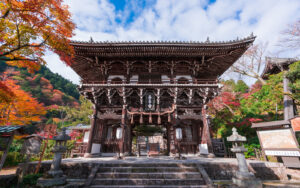
High above the southwestern edge of Kyoto is Yoshiminedera Temple. It offers fresh air, expansive views and a peaceful atmosphere as soon as you walk through the gate.
Yoshiminedera Temple
 Photo by: PIXTA/ でじたるらぶ
The temple grounds spread across a steep mountainside, rising nearly 70 meters from the gate to the upper halls. Your journey starts at the Mountain Gate (Romon). This entrance, built in 1716, is where all visitors are required to check in. Afterward, they pass by the powerful Kongo Rikishi statues created by the famous Buddhist sculptor Unkei. The path climbs gently, with many corners that reveal new scenes as you walk. Yoshiminedera lost several buildings during the Onin War. Still, the structures standing today owe much to the major reconstruction efforts of the Edo period.
Several halls reflect the long history. The Kannon Hall enshrines statues of the Thousand-Armed Kannon. The Tahoto Pagoda shows graceful Edo architecture and stands out against the mountain backdrop. From the grounds of Yoshimine-ji Temple, you can enjoy a panoramic view of Mount Hiei, Mount Higashiyama and even the distant mountains of Daigo across the basin.
Shaped by Nature and Legend
 Photo by: PIXTA/ でじたるらぶ
Yoshiminedera’s origins go back to 1029. The monk Gensan trained at Mount Hiei. He looked for a quiet place to continue his practice. A local deity guided him to this mountain. However, the ground here was rocky and uneven, making it impossible to build upon. A well-known legend says that wild boars leveled the land overnight, allowing the monk to construct his first hall. Later emperors supported the temple and it grew into a prominent and respected site through the following centuries.
One of the most famous natural features on the grounds is Yuryu no Matsu, a Japanese white pine more than 600 years old. It extends about 37 meters and resembles a long, resting dragon. Wooden supports lift the branches and visitors can walk under them. A high-ranked courtier gave the pine its name, “Reclining Dragon Pine,” which remains one of the temple’s best-known symbols.
Seasonal Colors
 Photo by: PIXTA/ でじたるらぶ
Yoshiminedera is especially beautiful during the changing seasons. Spring brings soft cherry blossoms that frame the steps and halls. In early summer, more than 8,000 hydrangeas bloom under the Kofuku Jizo statue, filling the hillside with blue, purple and pink.
Autumn is one of the most popular seasons. Because the temple is situated high on the mountain, the leaves change color earlier here than in central Kyoto. Winter brings a quiet scene, with snow resting on pagodas, statues, and branches.
A smooth route begins at the tower gate, continues past the Kannon Hall, circles through the area around the Reclining Dragon Pine and ends at the Yakushido viewpoint.