Lake Koyama
 Tomas Kauer - News Writer and Moderator
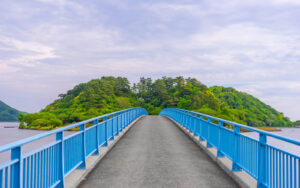
Lake Koyama (Koyamaike) in Tottori City, Tottori Prefecture is actually a lagoon or pond. Known as one of Japan’s largest pond, this “lake” is famous for its calm waters, seasonal scenery and peaceful atmosphere. Visitors come here to walk, relax, watch birds and enjoy the fresh air.
Lake Koyama
 Photo by: PIXTA/ dekoboko
About 200,000 years ago, the area around Lake Koyama was a bay. Sand dunes gradually built up, separating it from the Sea of Japan and creating Lake Koyama. This long process gave the lake its current form. The area is now part of the San’in Kaigan Geopark. The lake has a shoreline of about 18 kilometers.
At the peaceful lakeside, various flowers fill nature: cherry blossoms bloom in spring, patrinia flowers thrive in summer, bellflowers brighten autumn, and plum blossoms and camellias flourish in winter. You can also find solace in ladybugs, butterflies, dragonflies and wild birds.
Aoshima Island and Local Tradition
 Photo by: PIXTA/ haru
Aoshima Island sits in the middle of the lake. A walking path circles the island, and an observation deck gives a nice view of the lake.
The Children’s Play Zone on Aoshima Island is a popular cherry blossom spot, featuring over 500 trees of around 30 varieties, mainly Somei Yoshino. The different blooming seasons of the varieties allow for an extended viewing period. The Relaxation Zone is located along the western side of Lake Koyama, stretching from the Fukui area to the Kanazawa area. This area offers stunning views of the lake. Koyamaike Oasis Park, on the eastern shore of Lake Koyama, offers a stunning sunset view as the lake reflects a magical crimson glow.
Come winter, the lake is home to a unique fishing method called “Ishigama Fishing” found nowhere else in Japan. An ishigama is a stone structure placed at the bottom of the lake to guide fish. At the end of January, a long stick is used to poke the stones and scare the carp into a capturing device called a doukan. During the Edo period, farmers often took on fishing as a side job. There were almost 80 ishigama fishing spots, but now only four remain in the Mitsu region by Lake Koyama.