Chishaku-in Temple
 Tomas Kauer - Senior News Editor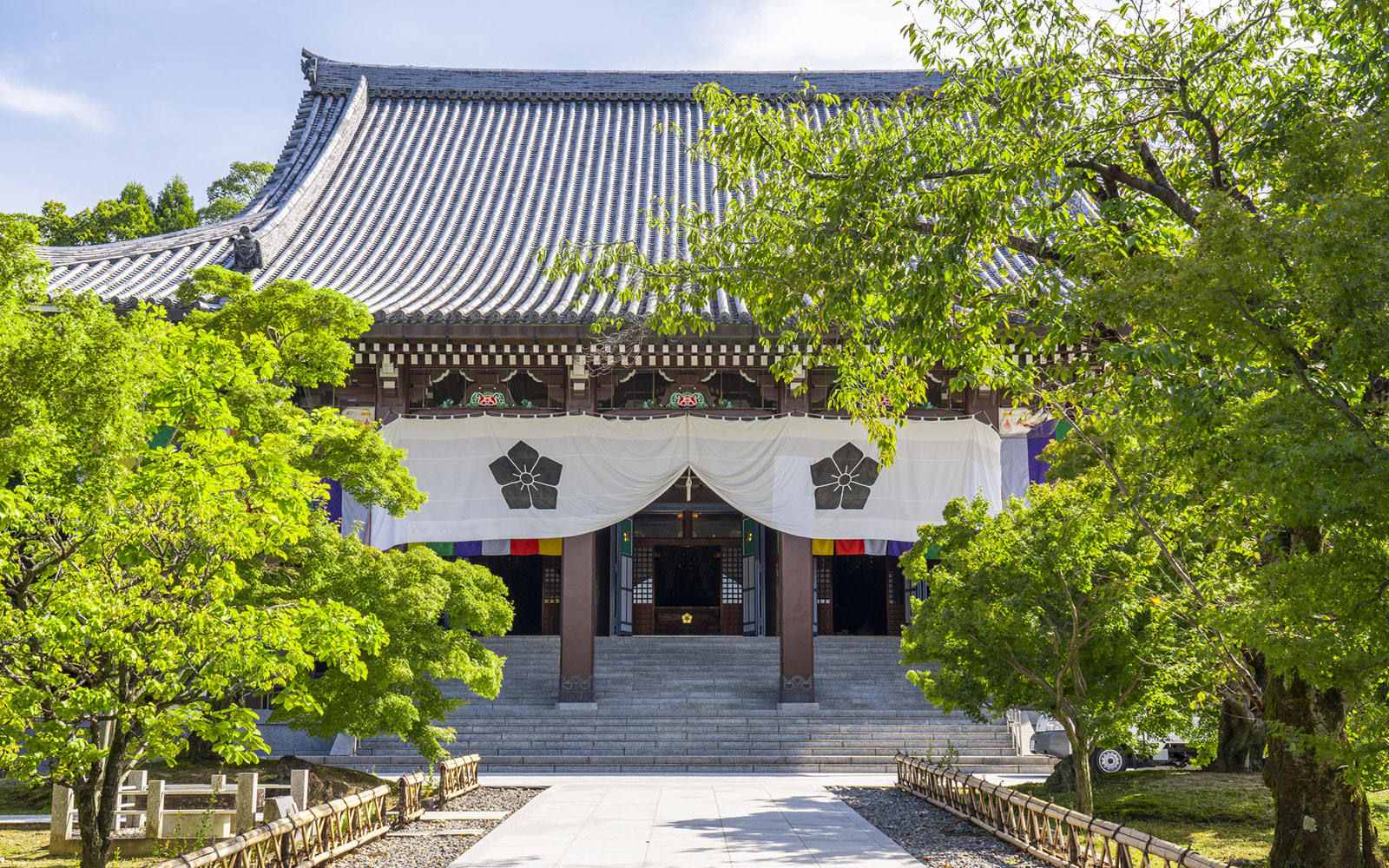
Located in Kyoto’s Higashiyama district, just a short distance from the heavily crowded Kiyomizu-dera, Chishaku-in Temple offers a peaceful 60,000-square-meter escape. As the head temple of the Chisan School of Shingon Buddhism, it oversees roughly 3,000 branch temples in Japan. It began in the 13th century as a sub-temple of Negoro-ji in Wakayama Prefecture. In 1585, the warlord Hideyoshi Toyotomi ordered the forceful destruction of Negoro-ji. Following this, Shogun Ieyasu Tokugawa delegated the chief priest Genyu to reconstruct the temple in Kyoto in 1601. Today, Chishaku-in remains a prominent center of learning for monks and continues to foster education in the Chisan Senshu Gakuen within its complex.
Featured Buildings
 Photo by: Alma Reyes
The temple grounds include numerous buildings, including the Daisho-in Hall, Kodo Lecture Hall, Kondo Main Hall, Myo-o Hall, Taishi-do Hall, Treasure Museum and accommodation facilities.
The Daisho-in (Grand Drawing Room) which faces the exquisite traditional garden and pond, is an outstanding example of seamless, aesthetic shoin-zukuri architecture. The raised veranda, decorative woodwork delicately maintained tatami-mat rooms and gorgeous paintings in striking colors make a breathtaking sight. Designated as a National Treasure, the lavish kinpeki shoheki-ga (sliding screen paintings on a gold background) were painted in the late 16th century by Tohaku Hasegawa and his son Kyuzo. They depict vibrant scenes of cherry blossoms, hollyhocks, maple trees and snow-covered pine trees. The ostentatious art blends harmoniously with the sublime exterior landscape—a priceless setting that visitors purposely come to see.
Connected to the Daisho-in, the Kodo Lecture Hall features gentle black-ink paintings on the fusuma throughout its five rooms. Modern artist Toshio Tabuchi created them to interpret the four seasons. The masterpieces also include “Waterfall” (Important Cultural Property) from the Southern Song Dynasty and “Kannon on Lotus Petal,” presented to the temple by Shogun Tsunayoshi Tokugawa.
Chinese-inspired Garden
 Photo by: Alma Reyes
Visitors sit inside the Daisho-in and gaze out at the celebrated strolling oasis, designated a National Place of Scenic Beauty. The respected tea master Sen no Rikyu greatly favored the landscape of Mount Lu in China. Consequently, in the 16th century, the temple built an artificial hill to represent the mountain’s rugged, mystical terrain. The pond mirrors the Yangtze River and extends beneath the hall verandas, creating the illusion that the building is afloat. Meticulously arranged rocks, stone water basins and a waterfall echo the motifs of old Chinese scroll paintings.
Hydrangea Garden
Visitors can wander along winding pathways full of beautiful hydrangeas in the garden behind the Kondo Hall. Pink, blue and purple blooms explode in early summer, while red plum blossoms emerge in spring.