






























Konkai Komyo-ji Temple


Konkai Komyo-ji Temple is an unmissable treasure in Kyoto. It is most famous for the sparkling Shiun Garden, also known as the Purple Cloud Garden. The name derives from the legend about Honen Shonin, the founder of the Jodo sect of Buddhism, who, according to legend, witnessed auspicious purple clouds floating over a rock, which signaled him to erect the temple on the same spot. The temple, thus, reflects this mystical, cloud-like beauty and its connection to the Pure Land Buddhism (the teaching of attaining salvation after death).
Konkai Komyo-ji Temple History
 Photo by: PIXTA/ でじたるらぶ
It is believed that Honen moved to this mountain after completing his ascetic training in Kurotani on Mount Hiei. In 1195, he established the first Jodo sect Buddhist temple on this site, naming it “Kurodani,” which translates to “black valley.” The main building is considered to be the most outstanding wooden structure of the 20th century in Kyoto.
Features
 Photo by: PIXTA/ blanscape
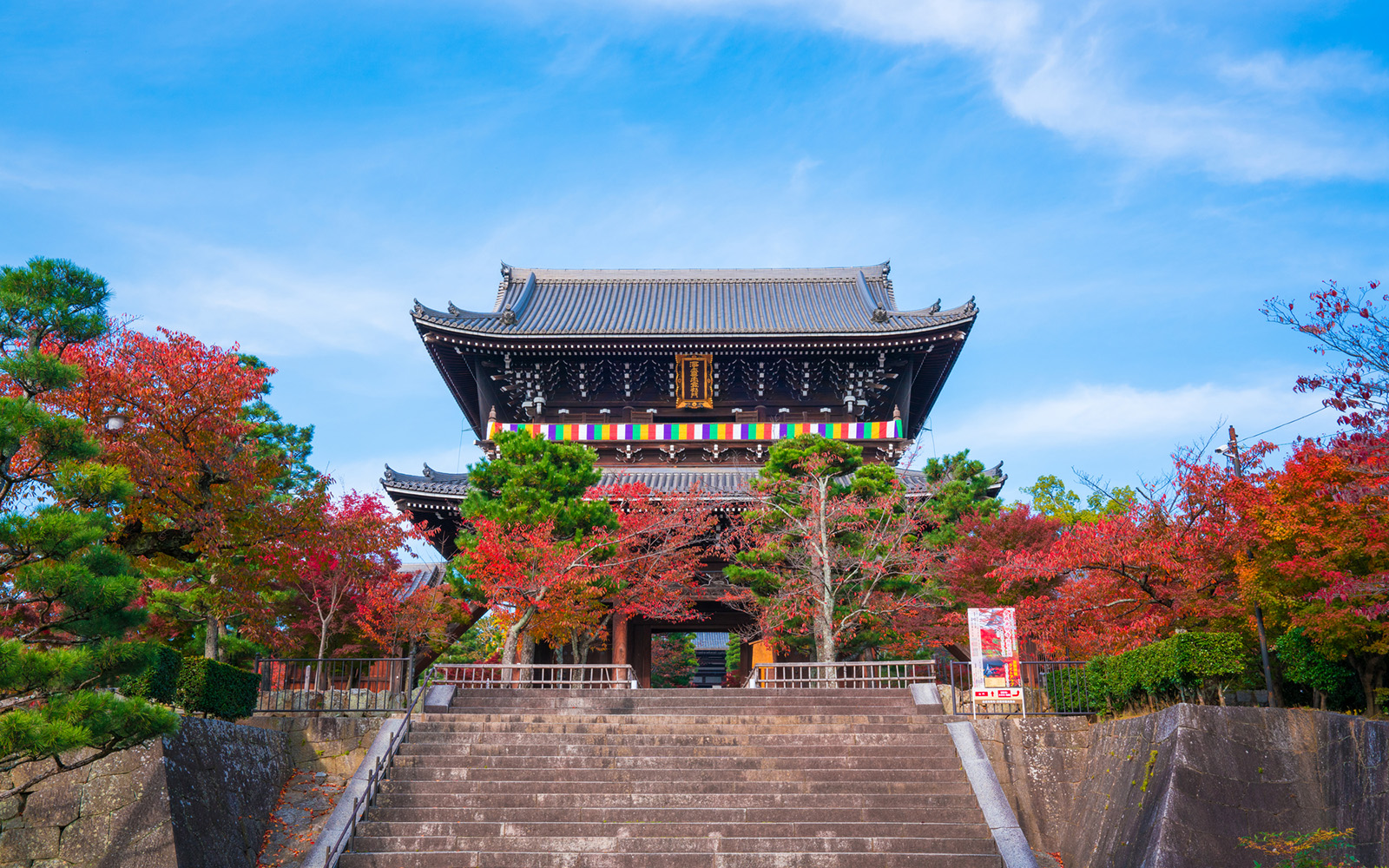
From the entrance, a long flight of stairs leads to the gigantic Sanmon Gate, a two-storey structure built in 1860. It showcases an Imperial plaque, inscribed with “The First Gate of the Jodo Shinshu Sect.” Standing on the top landing, visitors see a panorama of Kyoto city, which radiates brilliantly at sunset.
The main buildings are the Miedo Hall and Amidadoh or Amitabha Buddha Hall. The first is a Tangible Cultural Property that enshrines a wooden statue of Honen. The latter dates back to 1605, making it the oldest existing Buddhist structure in the complex. Both halls contain important relics, art and Jodo-related treasures. The fusuma doors display 19th-century tiger paintings that imbue the temple’s precious artistic heritage.
Purple Cloud Garden
 Photo by: PIXTA/ farmer
The garden behind the Miedo Hall consists of a karesansui (dry landscape) featuring white sand, moss and stones. Each element symbolizes Honen’s life and the Path of Encounters (the Buddhist concept of two interconnecting paths merged into one). Curated like a picture scroll, the right side of the garden illustrates Honen’s childhood and the left side depicts his ascetic training period in Enryaku-ji Temple—the pathways curve like a maze, encircling bridges, tall bamboo trees and a tranquil pond.