

































SL Banetsu Monogatari

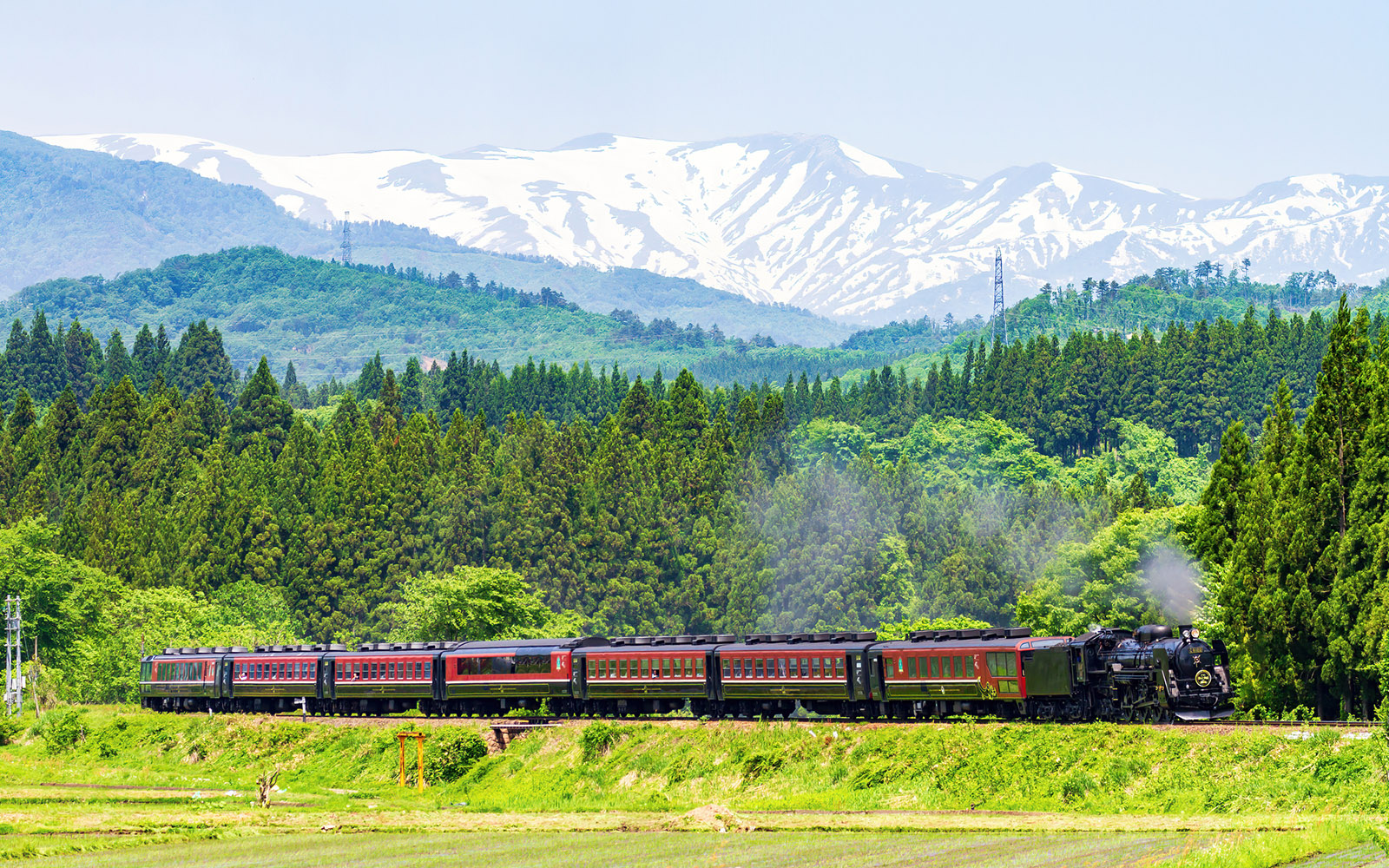

Train travel shapes everyday life in Japan, yet some journeys are meant to be taken at a leisurely pace. For travelers who enjoy slow travel and appreciate beautiful views, the SL Banetsu Monogatari offers a unique rail experience. This steam train brings back the vintage charm, when watching the landscape pass by was part of the pleasure.
SL Banetsu Monogatari
 Photo by: PIXTA/ 気まぐれJoh3
SL Banetsu Monogatari is a steam locomotive train that runs on the Ban’etsu West Line. It runs between Niitsu station in Niigata Prefecture and Aizu-Wakamatsu station in Fukushima Prefecture. The C57-180 steam locomotive powers the train and impresses with its elegant shape and smooth movement. After many years of being out of service, the engine was fully restored and returned to operation in 1999
The SL Banetsu Monogatari usually runs on weekends and national holidays between spring and autumn, with fewer trips during winter due to the weather. The full ride lasts about three and a half hours, giving plenty of time to enjoy the views along the way. Tickets are available through JR East and at major stations. Some JR Rail Pass holders can ride without extra charge, but checking dates and seat availability in advance is important.
The train cars are designed with a classic style inspired by the Taisho era. There is an observation car with large windows where passengers can enjoy wide views of rivers, forests and mountains. It has a commemorative stamp space and a postbox. A car offers free space for children to play, and a train shop sells Niigata ekiben, sweets, soft drinks and SL Banetsu Monogatari memorabilia.
Visiting Spots Along the Route
 Photo by: PIXTA/ Kuma-chan
Along the route, several towns offer interesting stops. Tsugawa is famous for its local legends and a small-town atmosphere. The train stops here longer than usual. Passengers can step onto the platform, watch the engine up close and take photos.
There are various tourist spots, including Mikawa, where tourists can go boating on the Agano River. Kitakata is another popular stop, famous for its many traditional storehouses. The journey ends at Aizu-Wakamatsu, a historic castle town. Here, travelers can visit the castle, old samurai residences, museums and traditional streets.