
























Nishiarai Daishi Daruma-Burning Ceremony

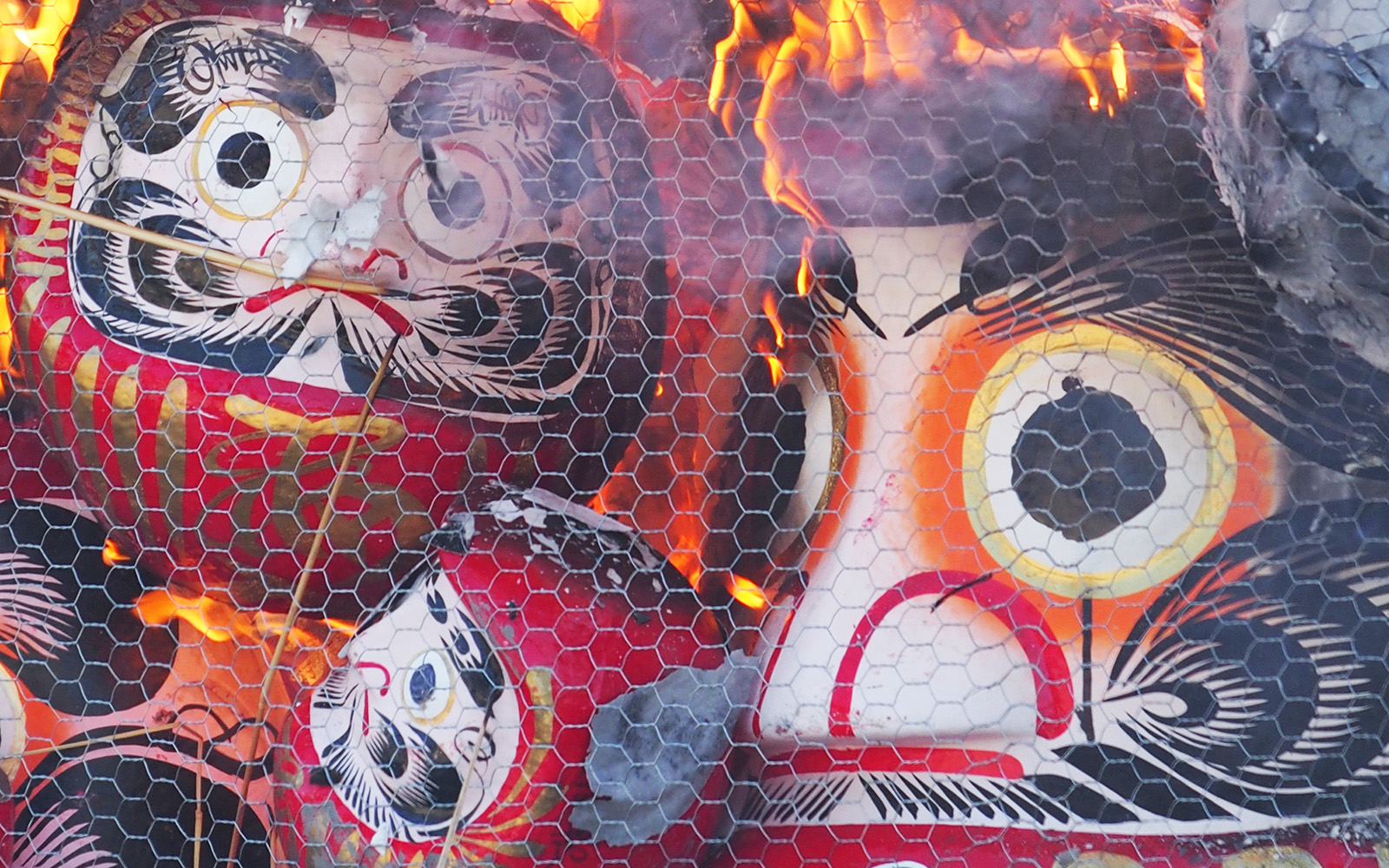
Nishirai Daishi is a historic temple, one of the three great temples of the Kanto region, built to ward off evil spirits. In early February, many temples in Japan celebrate Setsubun (the seasonal change) by throwing beans. But this temple starts celebrating the arrival of spring with a special ceremony called Daruma Kuyo or Daruma-burning. Instead of throwing them away, people bring old Daruma dolls that have granted their wishes to the temple. On this day, the dolls are burned at the temple with chants and reverence. This seasonal ritual dispels bad luck and welcomes new beginnings.
What is a Daruma?
 Photo by: iStock/ katana0007
Daruma are round Japanese dolls that represent the founder of Zen Buddhism, Bodhidharma. They represent patience, effort and perseverance. When someone buys a Daruma, they paint one eye and make a wish. It could be about work, studies, health, or something personal. When the wish comes true, the second eye is painted.
Once the year ends, many people bring their completed Daruma to the Nishiarai Daishi. The temple has held this ritual since 1954, but the belief behind it is much older.
Daruma Burning Ceremony
 Photo by: PIXTA/ mitchii
On the day of the ceremony, the temple premises slowly fill with people from all over. Old Daruma dolls are stacked high, creating a striking red mountain. Monks in traditional robes stand in line and begin chanting, creating a quiet, serious mood. Two monks then walk forward holding bamboo torches to light the fire. Fire plays an important role in the ceremony, symbolizing purification and renewal. Finally, they lit the Daruma pile, and the flames slowly rose through the dolls. The dolls continue to burn, and you can hear the crackling sound of the fire as the wishes they carried fade away. As the fire intensifies, the monks leave quietly. But the visitors watch in silence until the end.
The event is free and open to everyone. You can bring a Daruma, buy a new one for the coming year, or watch. Photography of this event is very popular.
Nishiarai Daishi Temple
 Photo by: PIXTA/ Gengorou
Nishiarai Daishi, officially called Gochisan Henjoin Sojiji, dates back to the year 826. The ground is large, with many halls worth exploring. Near the entrance stands the famous Salt Jizo, covered in white salt. People believe it helps heal physical ailments. Visitors often take some salt and promise to return double if their prayer is answered. During the festival on the temple premises, you’ll find shops filled with rice crackers, sweets, spices and Daruma dolls.