San’nai-Maruyama iseki Special Historical Site
 Tomas Kauer - News Writer and Moderator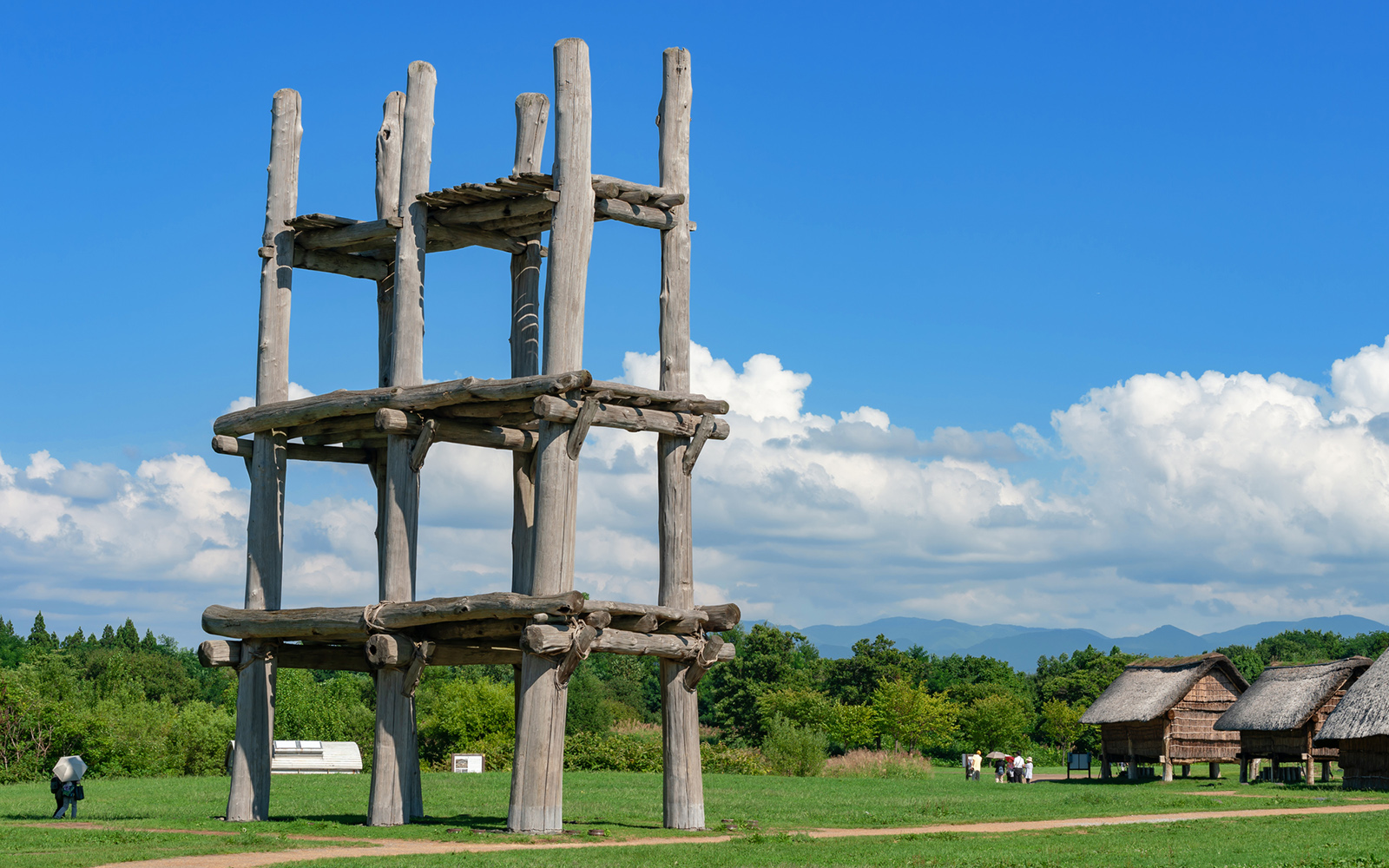
Among the many unique tourist destinations in Aomori Prefecture, the San’nai-Maruyama iseki Special Historical Site offers a closer look into the Jomon period. The settlement was inhabited for more than 1,500 years from around 3,900 to 2,200 BCE. The excavation commenced in 1992, revealing pillar-supported buildings, thatched-roof pit dwellings, burial tombs, pottery and other artifacts.
The expansive land covers 400,000 square meters. It consists of various zones spread out extensively and grouped separately by homes, warehouses and burial grounds. Visitors can wander freely through the remains of actual roads from the era and accurately visualize the daily life of the prehistoric settlers.
San’nai-Maruyama iseki Special Historical Site
The gigantic pillar-supported building was reconstructed into three stories, with a 4.2-meter-wide space between each of the six pillars. The columns, about 15 to 20 meters high, are made of chestnut wood, which was believed to have originated in the late mid-Jomon period. They were dug two meters deep into the ground and have retained their robust condition without decay.
The Jomon people hardened the bottoms of the pillars with heat and burned the soil, which helped the foundations survive for a long time. The framework may have functioned as a watchtower or a ceremonial building.
Ancient Houses
 Photo by: PIXTA/ kattyan
There are several dwellings on stilts throughout the grounds. They feature thatched roofs and facades made of reeds and bark. These structures are grouped in clusters, assumed to have been homes of the settlers. At the same time, they stored communal food and goods on an elevated floor to protect them from severe rain, moisture, and pests.
Other huts over ten meters long rest on the ground without raised pillars. The roofs use either bark, mud or thatch. You can enter some of the pit dwellings and notice the diverse floor shapes, post arrangements, and furnace placements. One large building measures 32 meters long and has an area of 250 square meters. Its construction was traced to the mid-Jomon era (4,800 years ago). The layout indicates a communal space for gatherings or workshops. Another dwelling displays artworks and tools that evoke the image of past activities.
Burial Grounds
 Photo by: PIXTA/ shima_kyohey
Further afield are burial grounds for adults and children. One can spot stone pieces encircling the tombs, with pottery and jade pendants buried together. There are about 900 tombs on-site, with burial jars for children.
Indoor Facilities
 Photo by: PIXTA/ Premium Photo Studio Takashi Images
Guests can visit the Sanmaru Museum, which showcases more than 1,700 artifacts excavated from the site. These include arrays of clay objects in various sizes and shapes used for rituals, as well as huge chestnut pillars. A life-size installation of a typical interior dwelling depicts inhabitants at work. A special Jomon Theater runs short introductory videos about the ancient Jomon lifestyle.