Nicchu Line Weeping Cherry Blossoms
 Tomas Kauer - News Writer and Moderator
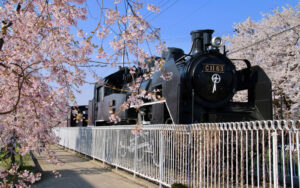
Kitakata, a small city in western Fukushima Prefecture, is known around Japan for Kitakata Ramen. In April, Kitakata becomes a flower-viewing destination as well as a ramen hub thanks to the Nicchu Line’s weeping cherry blossoms. About 1,000 weeping cherry trees bloom along this disused railway-turned pedestrian path.
Kitakata is accessible from Tokyo station in about three and a half hours by train. For cherry blossom lovers who want to eat ramen for breakfast (as is tradition at some local restaurants), this city is an inviting spring getaway.
History of the Nicchu Line
The Nicchusen (Nicchu Line) opened in 1938. Five stations and 11.6 kilometers of tracks led to the Atsushio and Nicchu onsen (hot spring) areas located to the north. Years later, problems like declining passenger numbers led to the Nicchu Line’s closure in 1984.
Memories of the Nicchu Line are preserved in places like the former Atsushio station. Now called the Atsushio Station Remains Memorial Museum, this historic site is about 20 minutes from Kitakata station by car or taxi.
Near Kitakata station, about three kilometers of the Nicchu Line were converted into a walking and cycling path lined with weeping cherry blossom trees.
Enjoying Cherry Blossoms on the Former Nicchu Line
 Photo by: PIXTA/ 鬼太鼓
The Nicchu Line weeping cherry blossoms typically bloom from around mid to late April. Along this cherry blossom lane, visitors will find canopies of flowers framed by the surrounding townscape and mountains. Benches located at certain points provide places to relax and enjoy the scenery. The highlight of this path, however, is a preserved steam train that was once used on the old railroad.
During the Kitakata Cherry Blossom Festival—held around the time the trees bloom—visitors can see the blossoms illuminated at night.
Other Cherry Blossoms Nearby
 Photo by: PIXTA/ Beautiful-Scenery-Japan
Visitors to the Nicchu Line weeping cherry blossoms should also visit Tsuruga Castle in Aizuwakamatsu. As Japan began modernizing in the late 19th century, this castle became a stronghold. Men and women of samurai families fought to preserve the shogunate, eventually enduring a siege at Tsuruga Castle. Ultimately, these fighters lost their battle, but their stories live on.
Multiple varieties of cherry blossoms bloom around Tsuruga Castle from about mid to late April. Although cities across Japan have castles surrounded by cherry blossoms, Tsuruga Castle is the only one in mainland Japan with a red roof. Photos taken here are one-of-a-kind.