Takayama Inari Shrine
 Tomas Kauer - Senior News Editor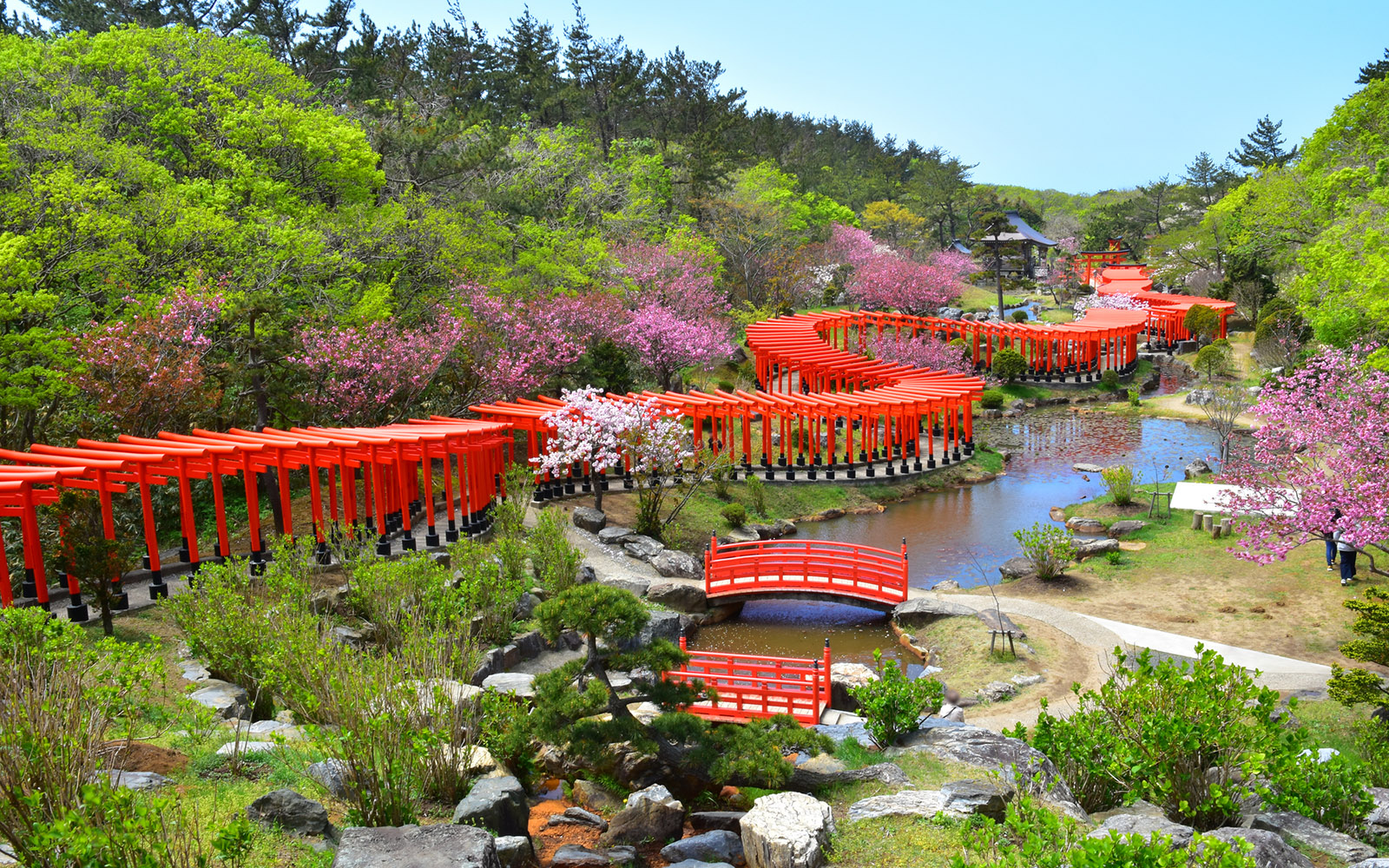

Takayama Inari Shrine, or the “Fushimi Inari of the north,” is believed to have been erected by the powerful Ando clan that governed the Tsugaru region in Aomori from the Kamakura to the Muromachi period. Here, see hundreds of torii (shrine) gates undulating like a dragon along about 1.3 kilometers uphill.
Takayama Inari Shrine History
 Photo by: PIXTA/ Yoshitaka
Around 1443, the Ando clan’s revered prayer site was destroyed by fire during a conflict with the Nambu forces. A legend states that in 1701, samurai Terasaka Sangoro carried a sacred object of the Inari Okami Shinto goddess to Hirosaki Castle in Tsugaru, and later transferred it to Takayama, where the original Sanno Shrine was enshrined.
Takayama Inari Shrine is dedicated to three deities: Uka-no-Mitama-no-Mikoto (goddess of agriculture), Sata-Hiko-no-Mikoto (god of guidance) and Omiya-no-Me-no-Mikoto (goddess of performing arts). It also offers divine blessings for abundant harvest, maritime safety and prosperity. Farmers and business owners often visit the shrine to pray for good fortune in their trades.
Features and Structures
 Photo by: PIXTA/ 渡邊トシ
The vast grounds sprawl on a hill with multiple elevations, making it a perfect hiking trail. From the lower entrance, visitors can reach the main shrine by a steep staircase or by a slope. From the top landing, the walkways split in directions toward overlooking decks and other shrine buildings, including the Yonoko Inari Shrine, Kumagoro Shrine and the haiden main hall, which sits atop a hill. The historical Sanno Shrine lies further ahead. The top of its gate illustrates symbols of the wind and waves.
The Ryujingu Shrine
The Ryujingu Shrine marks the starting point of the serpentine course of luminous gates. Two radiant vermilion bridges border the small shrine. Worshippers stop here also to honor the dragon god, which inspired the convoluted pattern of the famous torii gates.
Torii Gate Corridor
Now begins the challenging trek through the snakelike Senbon Torii (thousand torii gates) corridor. Over time, new gates have been continuously added through donations from patrons. The gravel path gently inclines, so a slow, leisurely pace is recommended to take in the vistas of the landscaped lake on the left and lush forest on the right. At the end of the meandering footpath, an elevated platform offers a view of the entire “scarlet dragon” amid the expansive terrain.
Behind the deck is the Shinmei Shrine, unembellished in plain wood. Worshippers offer prayers to stone statues of fox messengers, who represent the protectors of the Inari Kami. More than a hundred of them are scattered in this area.