





















Mangetsu-ji Temple Uki-mido

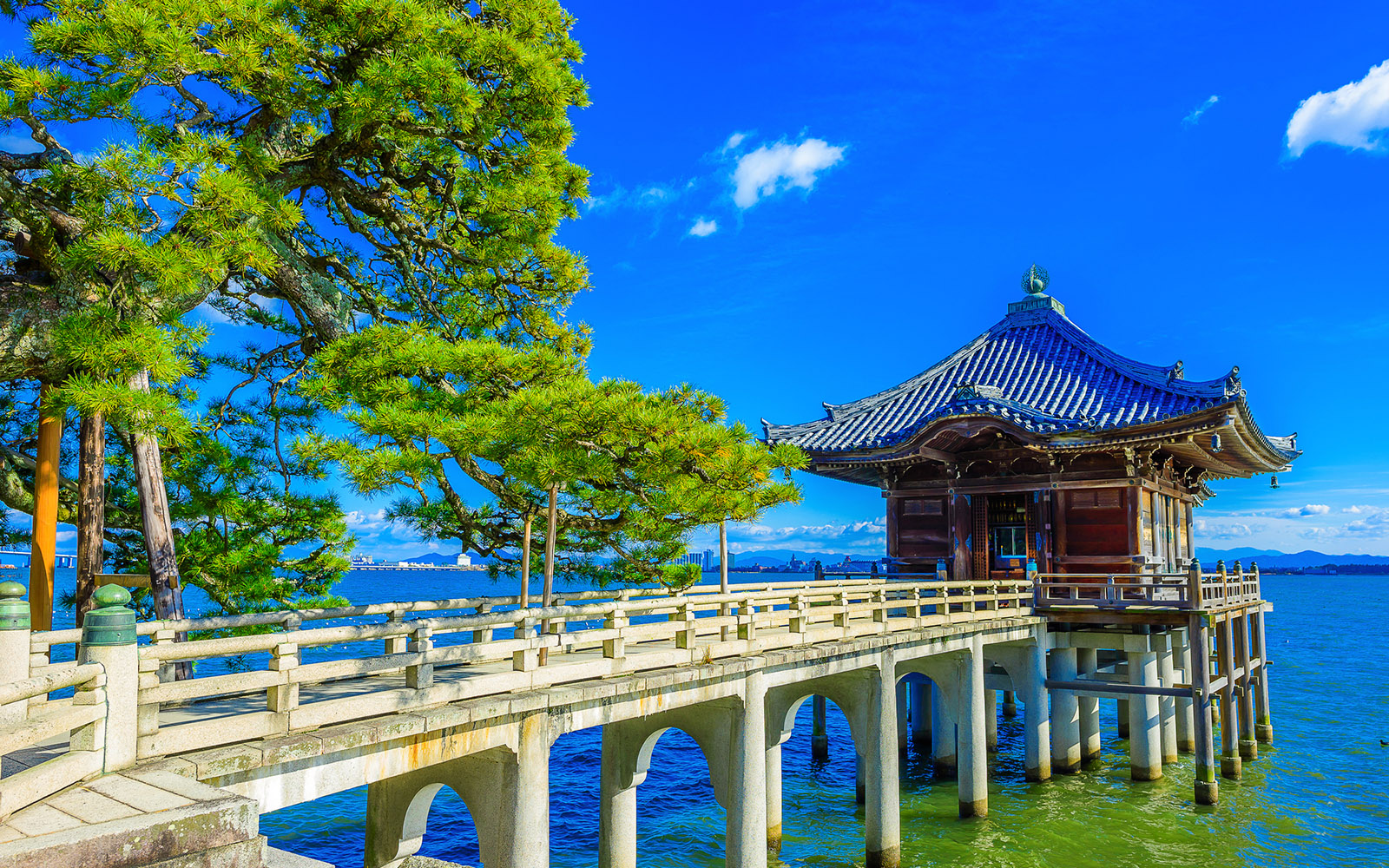
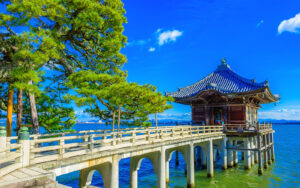
In just about forty minutes by train from Kyoto Station, the Mangetsu-ji Temple Uki-mido is a unique, historical treasure sitting gallantly on the shores of Lake Biwa. The temple is also called the Floating Pavilion and belongs to the Daitoku-ji sect of Buddhism. It boasts a distinct architecture, utilizing reinforced concrete stilts set into the water for support.
The site has attracted photographers, artists, and poets, including the legendary Matsuo Basho and Ukiyo-e artist Hiroshige Utagawa. The temple is popularly associated with the scene “Wild geese returning home at Katata” from the “Eight Views of Omi,” often depicted in Japanese art and poetry. Today, visitors can see geese soaring above the lake.
Mangetsu-ji Temple Uki-mido
 Photo by: PIXTA/ bee
The temple dates back to the Heian Period, when the monk Genshin spotted a bright light in Lake Biwa from the top of Mount Hiei. He descended to the lake, cast a net into the waters and scooped a glowing golden statue of Amida Buddha. As a homage, he carved a thousand Buddha statues and erected the temple to shelter them. The spiritual site has been a sanctuary for safety on the lake, especially for fishermen.
Temple Features
 Photo by: PIXTA/ bee
The entrance gate, designated as a Tangible Cultural Property, reveals a most imposing white, arched lower stone exterior and a wooden upper storey. The architecture follows the “Ryugu-jo Zukuri” style based on a dragon palace. A stone bridge stretches out to the water, linking to the main pavilion, which features a typical Buddhist structure with a protruding roof and wooden façade. A small altar opens to a ceiling decorated with gold leaf and floral paintings surrounding the thousand Amida Buddha statues.
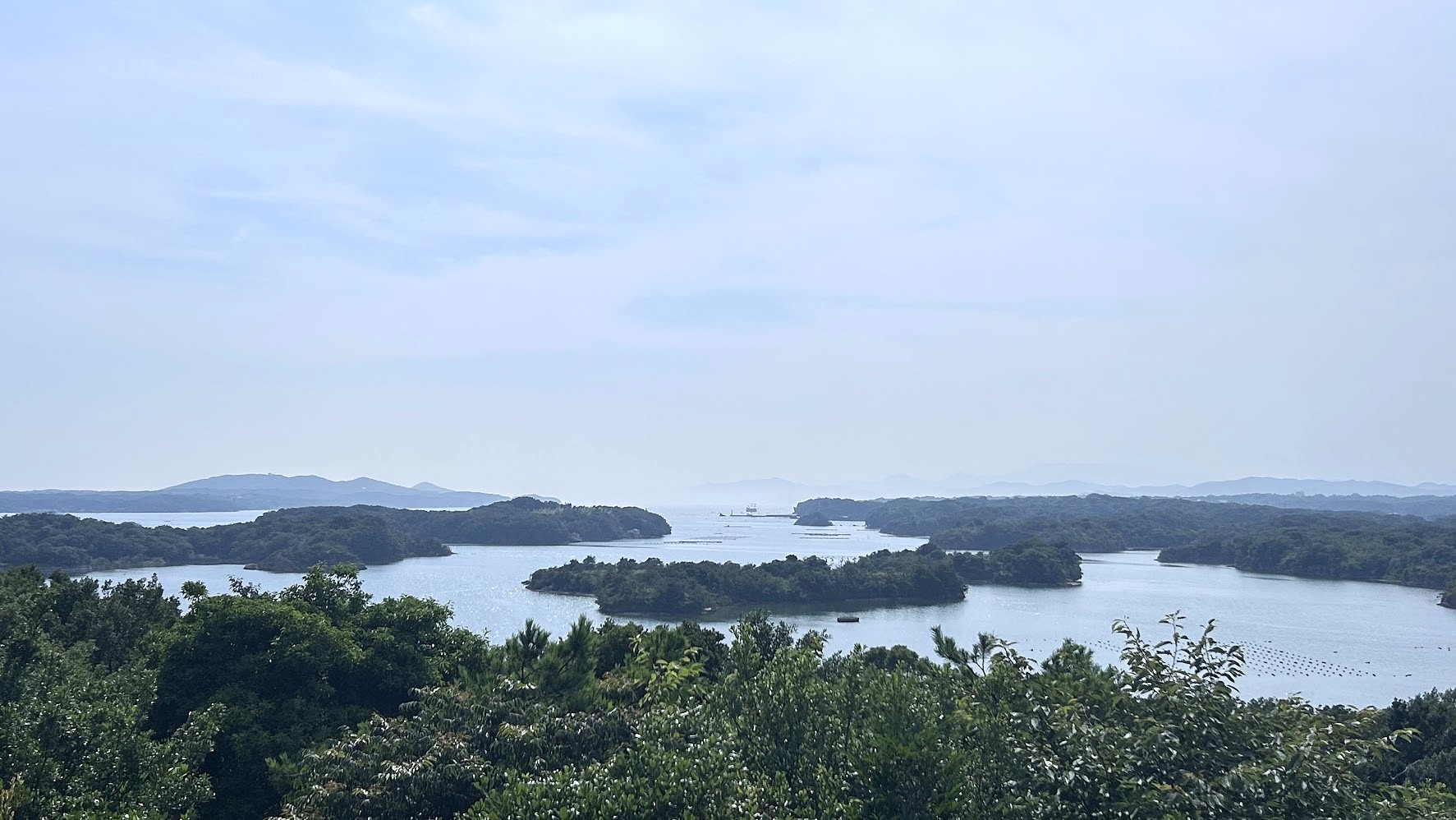
One can take silent moments on the veranda encircling the pavilion and absorb the tranquility of the vast lake scenery while listening to the cries of the geese. Mount Hiei is visible on the west side of the lake. Sunrise and sunset views are absolutely stunning, with the waters painted in chromatic colors.
Temple Grounds
Visit Gyokukotei tearoom, the Kannon-do Hall dedicated to the seated Kannon statue and a stone monument engraved with Basho’s haiku. A 600-year-old giant pine tree hovers over the stone bridge like a dramatic piece of sculpture. Cherry blossoms in spring and maple blooms in autumn spread across the small garden. From this viewpoint, you can see the temple’s stilts mirrored on the lake, leaving a most unforgettable sight.