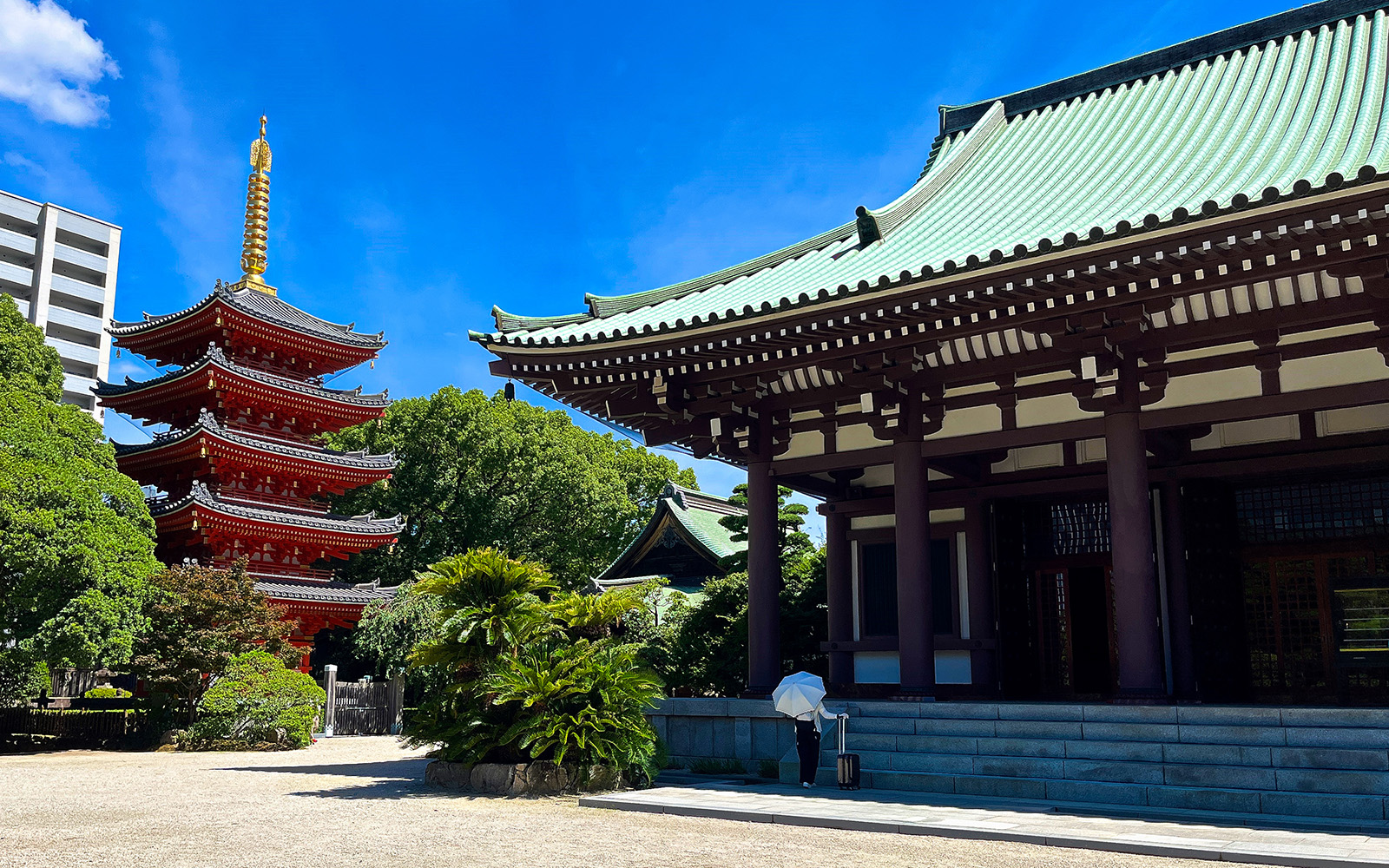
Hakusan Shrine
 Tomas Kauer - Senior News Editor
Niigata is well known for its premium Koshihikari rice, first-rate Japanese sake, bitter winter snow and world-class ski resorts. In fact, Niigata Port is the largest container cargo handler on the Sea of Japan coast of Honshu Island. In the latter half of the 17th century, the port served as a shipping hub for transporting the Shogunate’s rice, making it a flourishing trade hub. At the tip of the port, visitors can find Hakusan Shrine, which has stood as a vital guardian of the harbor. During the Edo period, in addition to religious worship, the shrine grounds were also a hub for loading rice bound for Osaka and Edo.
Hakusan Shrine History
 Photo by: PIXTA/ 髙橋義雄
With a history spanning over a thousand years back to the Heian and Kamakura periods, Hakusan Shrine in Niigata originally enshrined the deity of Mount Haku (Hakusan), regarded as one of Japan’s three consecrated mountains. The god was transferred from the head shrine, Hakusan Hime Shrine in Kaga Province to the present site. Because Niigata was a crucial port city, its seamen and traders considered Mount Haku to be a key protector of the seas. The shrine was later rebuilt in 1647, and Hakusan Park was completed in 1873.
Today, the religious site is renowned for its matchmaking goddess, Kikuri-hime-no-Okami, who fosters love and harmony in relationships. Worshippers can explore symbolic landmarks such as the sacred Hakusan “kukuri” rock brought down from Mount Haku, the “Musubi no Ichou” ginkgo tree and the “Musubi no Ema Kake” wooden plaques—all believed to bring good luck, healthy partnerships and family safety.
Shrine Grounds
 Photo by: PIXTA/ kumiko
Grand Torii Gate and Zuishinmon Gate
These two gates serve as the shrine’s auspicious landmarks. The Grand Torii Gate gleams in bright vermilion as people pass through a stone-lined approach surrounded by nature. Along the sandy pathway stand two reddish-brown, Bizen-ware guardian dogs, which were brought to the shrine from the Seto Inland Sea via traditional Kitamaebune cargo ships.
Walking past the Grand Torii Gate, visitors arrive at the majestic Zuishinmon Gate, characterized by a gabled roof, thick zelkova pillars, and complex woodwork. Sentinel figures protect the estate from evil forces.
Haiden Hall of Worship
Built in 1644, the main hall features a dark natural façade and a gracefully curved roof. The building design is devoid of ornamentation, expressing serenity and simplicity. It houses an “Ōfune” votive plaque depicting a maritime port.
Enkikan
The historic Meiji-era merchant residence belonged to the wealthy Saito family, a prominent business clan in Niigata. The building has preserved the traditional craft of “ranma” (ornate transom carving) and “jibukuro” (low, built-in cabinet carpentry). As a National Tangible Cultural Property, the architecture also encloses an elegant courtyard with a shikinkutsu (buried acoustic water cistern). Visitors can pay a special fee to enjoy a cup of green tea while admiring the garden.
Koryu Shrine
This structure honors the powerful Yellow or Golden Dragon god, who invites good fortune and wards off calamities. Visitors pray for protection by touching the divine jewel held by the dragon stone.
Hakusan Park
The shrine sits within an enormous seven-hectare park patterned after a Dutch-style garden. Both geometric and naturalistic, the landscape extends over walkways and a grove of cherry blossom and maple trees. The most eye-catching scenery is the charming Hasu Lotus Pond. Spectacular giant green lotus leaves with pale pink blossoms cover the pond entirely. It links to the Hyoutan Pond, which features a log-like bridge draped with crawling vines, traditional stone lanterns and a water fountain. During the flower season, wind chimes tinkle in the gentle breeze as visitors walk the winding paths.